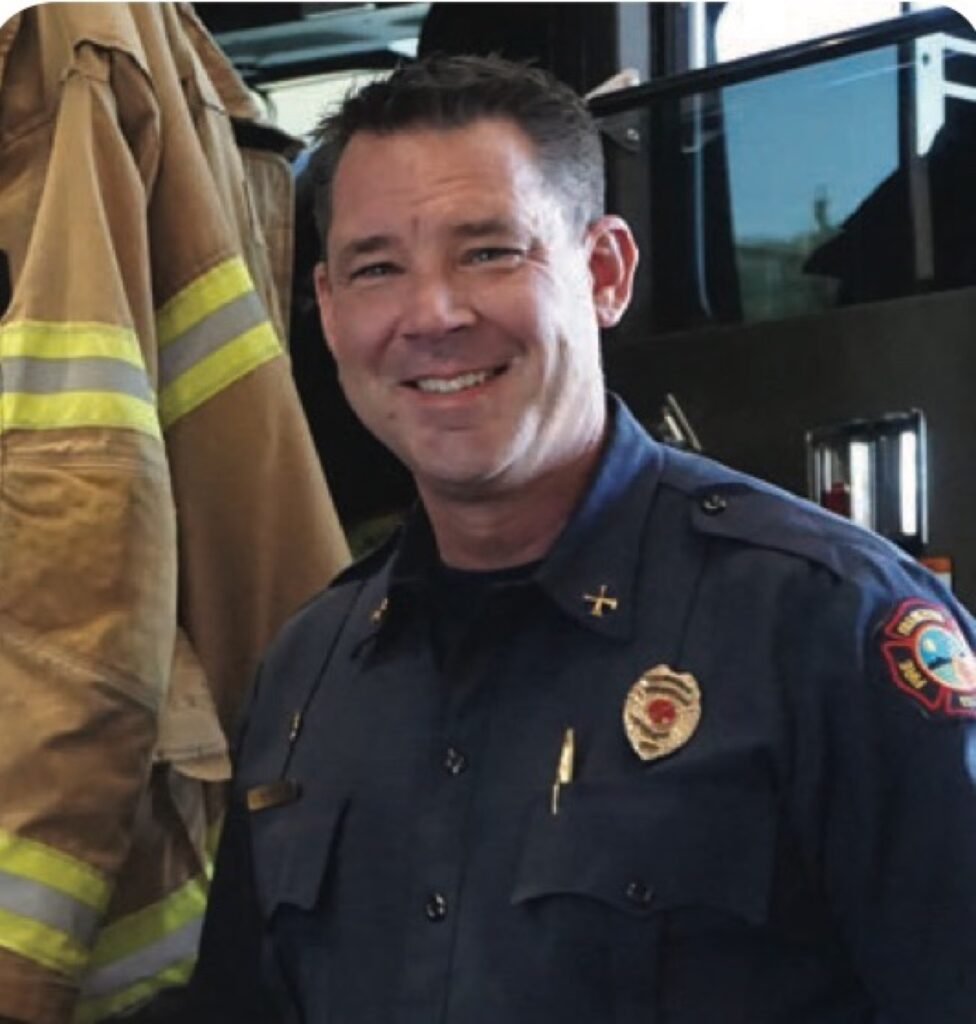
By Devin Bertram. Devin lives with his wife and four kids in Parker. He has been fighting fires for twenty-seven years. He started in southern California and has been a career fire fighter in the Franktown Fire Protection District for almost sixteen years. He was recently promoted to Division Chief of Training and Line Services. He has also worked as an EMT and paramedic.
The following are Captain Bertram’s personal opinions and in no way represent or imply an official position of the Franktown Fire Protection District.
Watching an emergency television show with a firefighter or paramedic means accepting that there will be commentary. Probably some eye rolling, laughing, and head scratching, along with the occasional “WTH?”
When people ask me whether shows like 9-1-1 resemble the job, my answer is usually, “The trucks and uniforms look familiar.”
In my opinion, Hollywood has a recipe: start with “sex sells,” add a heavy dash of drama, throw in unimaginable emergencies, and season generously with EMS protocol violations. Some procedures leave me thinking the rest of us would need an attorney before we finished the patient care report.
But the television responder always seems confident: “I read about this in a magazine once.” Apparently, that’s Hollywood’s version of a certification course. Never practiced it? Never trained for it? Against protocols and standard operating procedures? No problem. Someone hands them a pocketknife, a ballpoint pen, and a paper clip. Add a blood donation from a nearby bystander, the music builds, and suddenly they’re a trauma surgeon.
Meanwhile, I’m on the couch thinking, “That’s not a treatment plan. That’s Exhibit A in my criminal defense case.”
The firefighting scenes have their own magic. Someone delivers a heartfelt speech inside a burning building which everyone hears perfectly, and they emerge with hair ready for a shampoo commercial. Apparently, television smoke respects both dialogue and hair conditioner.
Then there’s the relationship drama. To me, these shows are soap operas with turnout gear. Sex, jealousy, rivalries, and personal conflicts fill the station, then follow the crew onto emergency calls. Somehow, the person needing rescue is an ex, a relative, or someone connected to a shocking secret.
At that point, I’m wondering whether the engine needs a couples counselor more than another firefighter.
We have personal lives and disagreements like everyone else. But my experience involves considerably more training, equipment checks, cleaning, and documentation than dramatic confessions beside a burning ambulance. Professionalism means working together and keeping the focus on the person who called for help.
That’s why I enjoy Jason Patton’s Fire Department Chronicles on social media. He green screens himself into emergency television scenes and reacts to the questionable decisions unfolding around him. To me, he says what many of us are thinking: “Hold on… We have several questions.”
For a show that gets closer, my classic pick is Emergency! Its medical practices reflect another era, but I appreciate its emphasis on teamwork, assessment, and patient care. Johnny and Roy usually had enough problems on the call without discovering the patient was part of a station love triangle.
For a modern example, I’d include The Pitt on HBO Max. In my opinion, season one comes close to capturing the pressure, competing priorities, and human side of emergency care. Season two feels like it adds more drama and Hollywood flair, as though someone said, “Excellent medical work. Could we prescribe a little more personal conflict?”
I enjoy these shows as entertainment. I just reserve the right to question the rescue plan and occasionally yell, “That’s not how that works!”
My pitch for a realistic episode? Check the truck, train, run calls, reheat dinner twice, and finish the reports. Probably a tough sell in Hollywood, but it sounds like a familiar shift to me.
At the end of the day, if you’re watching for entertainment, take it for what it is… entertainment. Enjoy the action, laugh at the ridiculous parts, and get caught up in the steamy story. Just don’t mistake it for a typical shift. In my experience, those nonstop disasters, miracle procedures, and tangled relationships aren’t everyday life in emergency services. Hollywood has a script. We, on the other hand, have a job to do.